Project Artichoke
Project Artichoke was an early, secretive U.S. intelligence program of the 1950s that sought to discover whether a person could be controlled, coerced, or programmed to act against their conscious will. Working in the shadow of the Cold War, researchers fused hypnosis, drugs, interrogation techniques, and suggestion to explore induced amnesia, forced confessions, superhuman memory training, and the terrifying possibility of creating a “controlled” agent.
This foundation holds both the clinical mechanics and the moral rupture of those experiments. It traces how sacred practices of trance and suggestion were repurposed into instruments of dominance, and it asks the enduring question: what happens to human dignity when interior freedom is treated as an engineering problem?
Origins and Intent
Project Artichoke emerged from a threshold moment in world history, a time when the battlefield shifted from physical terrain to interior perception. In the wake of World War II, with rising Cold War paranoia and rumors of Communist “brainwashing,” the intelligence world turned its gaze inward. The question was no longer how to defend the body. It was how to invade the mind.
This program was not born from curiosity alone. It arose from a fear of invisibility, of not knowing what thoughts could be changed, what secrets could be extracted, or what loyalties could be rewritten from the inside. In this vacuum of spiritual integrity, the sacred tools of trance, memory, and consciousness were stripped of their soul and placed under the surgeon’s light.
Here begins the story of how Project Artichoke came to be. Its intentions, its descent from earlier experiments, and the invisible ink in which it was written.
The Cold War’s Psychological Arms Race
The Climate of Fear and Surveillance
🕰️ In the early 1950s, global powers raced to outmaneuver one another, not only with weapons, but with ideologies and mental manipulation.
🧊 American intelligence feared that foreign regimes had discovered ways to reprogram loyalty through suggestion, trauma, or trance.
📡 The battlefield expanded into the psyche. Suddenly, thoughts, dreams, and memories were seen as security risks or weapons.
🪖 Psychological warfare became a central tool of both offense and defense in U.S. strategy.
Brainwashing and the Myth of Total Control
🧠 Reports from Korea and China suggested soldiers could be made to betray their country through unknown methods.
🌫️ The term “brainwashing” was coined as part propaganda, part warning, part invitation.
🔥 U.S. agencies sought to surpass these alleged techniques and develop their own mastery over mind and will.
🌑 In this climate, ethics were suspended, and the soul became a site of scientific conquest.
The Inheritance of Bluebird
Evolution from Project Bluebird to Artichoke
🔍 Project Bluebird was initiated in 1950 by the CIA to test hypnosis, drugs, and suggestive conditioning.
📖 Its methods included interrogative hypnosis, forced addiction, memory control, and dissociation through trauma.
🪶 Though initially framed as defensive research, the techniques moved quickly into aggressive psychological experimentation.
🧬 By 1951, Bluebird evolved into Project Artichoke, an expanded program with broader reach and darker aims.
🗝️ Artichoke absorbed the files, personnel, and mission scope of its predecessor and added more ambitious directives.
Official Objectives and Hidden Agendas
Extracting Intelligence Through Mental Control
🗂️ The stated goal of Project Artichoke was to refine interrogation, making subjects confess, comply, or forget.
💉 Techniques included drugging, sleep deprivation, and post-hypnotic suggestion to weaken resistance.
🔐 There was a strong focus on inducing amnesia, especially in ways that would prevent a subject from recalling sensitive operations.
🎭 Artichoke sought to develop controllable assets who could hold secrets without conscious awareness.
Testing the Limits of Will and Identity
🧿 At its core, Artichoke asked forbidden questions:
Can a person be made to act against their moral compass?
Can they carry out an assassination with no memory of it?
Can we rewrite not just behavior, but belief?
🕳️ These questions were never publicly answered, but they shaped the contours of Artichoke’s most secretive sub-projects.
Structure, Secrecy, and the Shadow of Consent
Hidden Networks and Front Organizations
🏛️ The project operated through hospitals, prisons, military bases, and psychiatric institutions across the U.S. and abroad.
💼 CIA officers created shell organizations and false identities to disguise funding and operations.
🩺 Doctors, psychologists, and hypnotists were contracted, some knowingly, some without full understanding of the work’s implications.
The Absence of Informed Consent
❌ Most test subjects were unaware they were part of an experiment. Some were soldiers. Others were incarcerated or institutionalized.
🧬 Consent, when gathered, was often manipulated or meaningless. Power dynamics erased the possibility of free choice.
🧱 The ethical boundary between treatment and violation dissolved in the name of national interest.
🌫️ The secrecy around the project allowed it to operate for years without accountability or external oversight.
Methods and Mechanisms
Project Artichoke was built on the belief that consciousness could be rewritten. Not through insight or transformation, but through force, through the strategic dismantling of memory, will, and resistance. The question was not whether a person could change. It was whether that change could be imposed, encoded, and made invisible to the one being changed.
This section explores the dark rituals of this programming: hypnosis paired with chemical disorientation, memory loops implanted through repetition, interrogations masked as therapy. These were not myth. They were documented techniques tested on real bodies, often without their consent, often without their awareness.
Here, we reveal the mechanics of control, and beneath them, the deeper truth that no matter how sophisticated the method, the soul’s essence cannot be fully owned.
The Use of Hypnosis as a Tool of Dissociation
Inducing Trance for Suggestibility
🌀 Hypnotic induction was used to open access to the subconscious and suspend the subject’s critical thinking.
🌘 Deep trance states were designed to make individuals more pliable, dissociative, and vulnerable to suggestion.
🎭 Hypnotists attempted to override personal will by implanting behaviors or responses that would be triggered later.
🧩 Some sessions included false memory implantation or programmed forgetfulness, using post-hypnotic commands.
Testing Duality of Consciousness
🕳️ One goal was to create a split between the “front” personality and the “controlled” persona underneath.
🔐 In some cases, researchers tried to implant a secondary identity that could be activated by code words or gestures.
🕯️ The subject would act without conscious recollection of their behavior, fostering internal confusion and vulnerability.
Pharmacological Enhancements and Chemical Control
Drug Use to Distort Perception and Memory
💉 Substances like LSD, scopolamine, sodium pentothal, and barbiturates were administered to alter mental states.
🌫️ These chemicals weakened ego structures and increased receptivity to suggestion, disorientation, or submission.
🧠 Some cocktails were designed to erase memory after interrogation; others aimed to facilitate recall of suppressed material.
⚗️ Certain compounds were given in repeated or escalating doses, often without the subject’s knowledge or consent.
Synergizing Drugs with Hypnosis
🧬 Combining trance with chemical influence magnified dissociative effects, allowing deeper implantation of commands.
🧊 The subject was less likely to resist, remember, or even recognize that they were being programmed.
🛌 Sleep deprivation or isolation often followed to destabilize their ability to integrate the experience.
Psychic Driving and Memory Reconditioning
Creating Behavioral Loops Through Repetition
🔁 Psychic driving involved playing repeated verbal messages while the subject was sedated or hypnotized.
🎧 These messages were played for hours, or even days seeking to overwrite identity or implant compulsions.
🛠️ In some cases, the goal was to erase a memory by flooding the subject with contradictory suggestions.
🪞 In others, an entirely new narrative was implanted, complete with false emotions and self-perceptions.
Sleep and Isolation as Tools of Breakdown
🛏️ Extended sleep periods induced by drugs were used to lower resistance and deepen absorption of programming.
🧱 Isolation chambers created sensory deprivation, which disoriented the nervous system and made subjects easier to suggest.
🪞 Fragmented sleep-wake cycles and lack of external reference points destabilized the ability to discern reality from suggestion.
Experiments in Amnesia, Obedience, and “Superhuman” Memory
Testing Post-Hypnotic Amnesia
🧩 Subjects were instructed to forget specific tasks, encounters, or commands until triggered by a cue.
🎲 Researchers observed whether behaviors could be “stored” out of conscious awareness and accessed on demand.
⏳ Some sessions aimed to test delayed response, actions performed hours or days later under subconscious instruction.
Memory Implantation and Enhancement
🧠 In contrast to amnesia, other tests focused on super-memory, using hypnosis and drugs to create photographic recall.
📚 Subjects were asked to memorize vast data sets or classified information while in altered states, then tested later.
🔑 The goal was to determine if the subconscious could be “trained” for higher storage and rapid retrieval.
Disclosure and Impact
Project Artichoke did not vanish. It slipped between names, files, and false doors. Much of what we know is fragmentary, drawn from declassified documents, personal testimonies, and investigative threads left hanging in time. Yet even partial light reveals much. It shows the web of complicity, the voices that dared speak, and the silence that followed.
This chapter is not just about documentation. It is about how truth surfaces, imperfect, inconvenient, and sacred. It is about how institutions respond to being seen, and how the human spirit insists on remembering, even when records have been burned.
Deliberate Obfuscation and Lost Records
Systematic Destruction of Documents
🗄️ Many Project Artichoke files were destroyed in classified purges during the early 1970s, particularly under CIA Director Richard Helms.
🔥 What survived were scattered pieces: memoranda, receipts, clinical notes filed under unrelated headings.
🧾 These remnants painted a partial picture, enough to confirm the existence of non-consensual experimentation.
Hidden Within Bureaucratic Labyrinths
🧊 Artichoke records were interwoven with other projects like Bluebird and MK-Ultra, making it difficult to distinguish boundaries.
🪶 The renaming of programs and shuffling of personnel served to obscure continuity and accountability.
🔍 Much of what is known comes not from transparency, but from errors, misfiled documents, FOIA leaks, or survivor-led discovery.
Witnesses, Whistleblowers, and Survivors
First-Person Testimonies
🎤 Subjects began to come forward in the 1970s and 1980s, many with fragmented memories, dreams, or therapeutic breakthroughs.
🌪️ Some described experiences that echoed known techniques: memory loss, sudden compliance, inexplicable fear responses.
🧩 Their narratives often included dissociation, missing time, and implanted behaviors, hallmarks of coercive trancework.
Reception and Resistance
🛑 Many survivors were dismissed as delusional or unstable, especially when their claims involved spiritual or metaphysical language.
🧬 Some were retraumatized by disbelief, institutional gaslighting, or being pathologized instead of supported.
🕯️ Yet a growing chorus of researchers, therapists, and truth-seekers began listening, holding space for testimony as sacred data.
Institutional Acknowledgment and Denial
Partial Exposure During Senate Hearings
📺 In 1975, the U.S. Senate's Church Committee held public hearings on intelligence abuses, including MK-Ultra and its predecessors.
📖 Project Artichoke was mentioned, but rarely unpacked in full detail; it was absorbed into the broader scandal of mind control research.
🕳️ Officials described these programs as failures or exploratory, downplaying their scope and consequence.
Lack of Accountability and Reparations
⚖️ Despite confirmed non-consensual experimentation, no high-level officials were prosecuted for human rights violations.
🧾 Some victims received small settlements, but no formal apology or systemic redress was offered.
🧱 Institutions that partnered in the experiments, medical centers, military facilities, universities, faced little scrutiny.
Cultural Reverberations and Collective Impact
From Scandal to Mythology
🎬 The secrecy surrounding Project Artichoke helped it pass from exposed history into collective myth.
📚 It inspired stories of sleeper agents, programmed assassins, and fractured minds in films and novels.
📡 In the cultural imagination, it became a symbol of what power can do when unconstrained by conscience.
Persistent Cultural Suspicion
🕳️ Even today, discussions of hypnosis, mind control, or trauma-based programming often trace back to Artichoke-era experiments.
🔮 The language of “targeted individuals,” “programmed alters,” and “black ops” continues in fringe communities, some rooted in truth, some in distortion.
💭 Whether myth or memory, the echo remains: that consciousness, once manipulated, never fully forgets.
Healing and Ethical Reclamation
When a soul has been tampered with, fragmented, doubted, programmed, what restores it? Not denial. Not vengeance. But sacred reclamation. This is the path of reintegration, where power is no longer the ability to control others, but the ability to inhabit oneself fully.
Project Artichoke sought to split the will. This final category seeks to return it. It offers the tools, truths, and ceremonies that can unbind the inner voice from outer programming. Here, hypnosis is not a weapon, but a gateway. Trance becomes a sacrament. And the psyche is no longer a subject of research, but a sanctuary of remembering.
Understanding Psychological Programming and Dissociation
How Trauma Creates Internal Division
🪞 Dissociation is a survival response. When overwhelming experiences occur, the psyche splits to preserve function.
🌫️ This split can be hijacked, used to bury memory, insert commands, or create “compartments” within consciousness.
🧩 Many victims of coercive control describe fragmented identities, time loss, or memories that surface in layers.
Awareness as the First Unbinding
🌱 Healing begins when you recognize that what you experienced was not weakness, it was intelligence.
🔍 The goal of recovery is not to eliminate the parts, but to welcome them home.
🕯️ Naming the techniques (trance, suggestion, amnesia) removes their power and returns language to the soul.
Reclaiming Trance and Hypnosis as Sacred Tools
Trance as a Natural State
🌊 Trance is not dangerous. It is a daily phenomenon, found in music, prayer, dance, and deep presence.
🌬️ The difference lies in intention. Coercive trance bypasses choice; sacred trance awakens it.
📿 Hypnosis can be a bridge to the inner self, revealing subconscious wisdom and restoring lost pieces.
Practices of Soul-Led Reconnection
🎧 Safe guided meditations, regression work, or healing hypnosis (with trusted facilitators) can bring back lost memories.
🧘 Somatic anchoring before and after trance states protects the body’s safety and restores nervous system trust.
🌺 Self-hypnosis, mantras, or conscious visualization become ways to rewrite harmful imprints with sacred intention.
Consent, Ethics, and Energetic Integrity
Consent as Spiritual Contract
🗝️ The deepest violation of Project Artichoke was the removal of consent. This must now become sacred.
💎 In all healing modalities, there must be full transparency, mutual agreement, and space to say no or stop.
🌸 Practitioners must cultivate humility, presence, and impeccable ethics in every energetic interaction.
Restoring Boundaries and Discernment
🧿 Healing is not just about openness, it is about clarity. Not everything that whispers to you is truth.
⚖️ Learn to discern inner voices, patterns, or impulses that feel imposed versus those that arise from soul knowing.
🛡️ Boundaries are spells of protection. They affirm your sovereignty in spiritual and psychological space.
Community, Witnessing, and Collective Repair
The Power of Being Believed
🕊️ Many survivors of psychological manipulation suffer twice: once from the trauma, then from the disbelief.
🫂 Community that listens without pathologizing becomes medicine. Witnessing becomes alchemy.
📖 Storytelling, journaling, and sharing in safe circles rewrites internal narratives of isolation and shame.
Collective Ethics and Future Guardianship
🌍 Healing from programs like Artichoke is not personal alone, it is planetary. It reshapes how we hold power.
🪶 Practitioners, therapists, mystics, and seekers must commit to ethical lineages of respect and consent.
🧬 This is the lineage of repair, where trance, memory, and suggestion become sacraments, not weapons.
Explore Aligned Foundations
Is Chi real? Explore the radioactive isotope study from Necker Hospital and the 11th-century Mercury Test that proved the existence of acupuncture meridians.
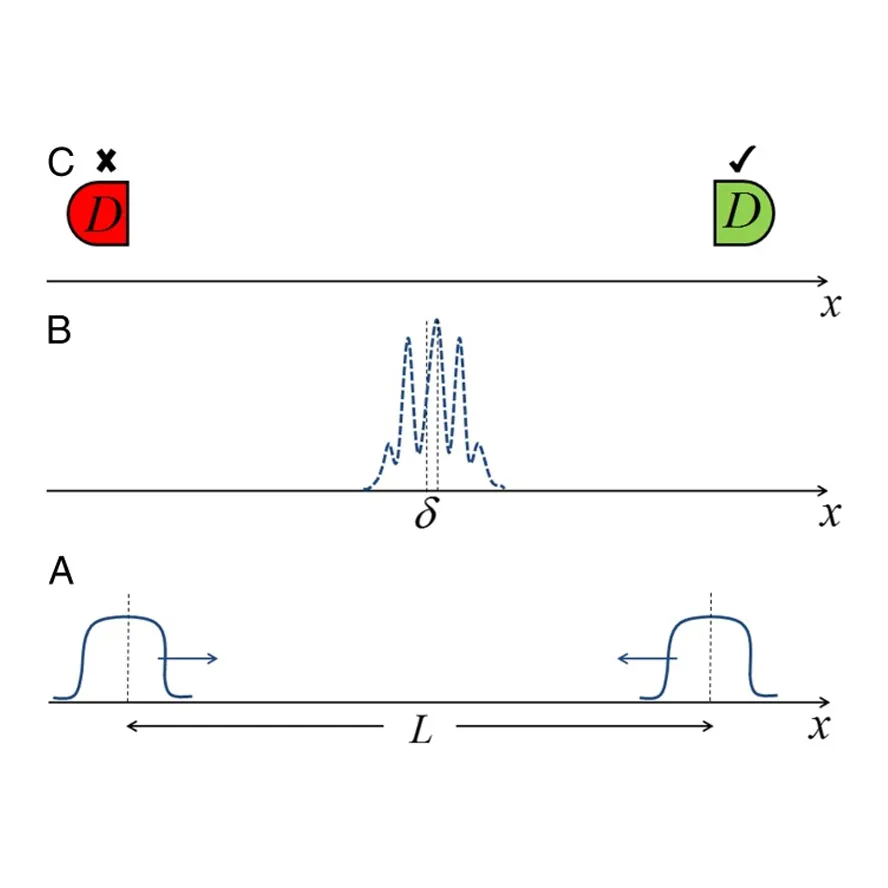
Quantum experiment revealing how observation influences reality. A gateway to understanding consciousness and matter.
Academic research on consciousness and its ability to influence physical systems. Mind over matter, scientifically explored.
CIA mind control program exploring hypnosis, trauma, and behavioral manipulation. A shadow chapter in psychological history.
An early program investigating behavior manipulation through drugs and conditioning, preceding MK-Ultra.

A covert CIA program exploring paranormal warfare and occult research during the Cold War.
Pioneered research on remote viewing, ESP, and consciousness during government-sponsored psychic experiments.
Declassified training on out-of-body travel and expanded consciousness developed by the Monroe Institute for the U.S. military.

Mass meditation’s power to influence collective consciousness and reduce societal stress through coherence.